I used to be a big red wine drinker. Big. If there'd been a loyalty card for Rioja, I'd have had the gold one, a lanyard and my own parking space.
So when I say alcohol-free red is the hardest wine to get right, I'm not being a snob. I'm a bloke who knows exactly what he's missing, and who now runs a shop where people ask me about it a lot.
This is the honest review. What alcohol-free red actually tastes like, which bottles on our shelf are worth your money, and how to serve them so they don't taste like posh Ribena. If you just want the ranked list, that lives over in the 11 best non-alcoholic red wines.
The short answer
Alcohol-free red wine is worth drinking, as long as you go in with the right expectations. The good ones have proper dark fruit, a dry-ish finish and enough grip to stand up to food. None of them will feel like a 14% Shiraz, because alcohol is a big part of what gives red its weight and warmth.
Serve it lightly chilled, in a big glass, with food. Start with a soft Merlot or a well-made Cabernet, not the biggest, boldest label on the shelf.
What to expect from your first glass
Let's manage expectations, because nobody else will. Most decent alcohol-free reds start life as real wine. The alcohol is then taken out, usually by gentle vacuum distillation at low temperatures, to keep as much flavour as possible.
The catch is that alcohol does a lot of work in red wine. It carries the aroma, adds body and softens the tannins. Take it out and things can go thin, sharp or a bit sweet. It's like watching Jaws without the music. Still a shark. Much less tension.
So expect fruit first: plum, cherry, blackcurrant. Expect a lighter body than you're used to. Some makers add a little grape juice back to round things out, so a few bottles are slightly sweeter. That's not a crime, but it's worth knowing before you pour. Here's the plain-English version of what's actually in non-alcoholic wine.
The honest verdicts: the reds on our shelf
These are the alcohol-free reds we actually stock, and who each one's for. No marks out of ten. I'm not the Michelin man, I just look a bit like him in a puffer jacket.
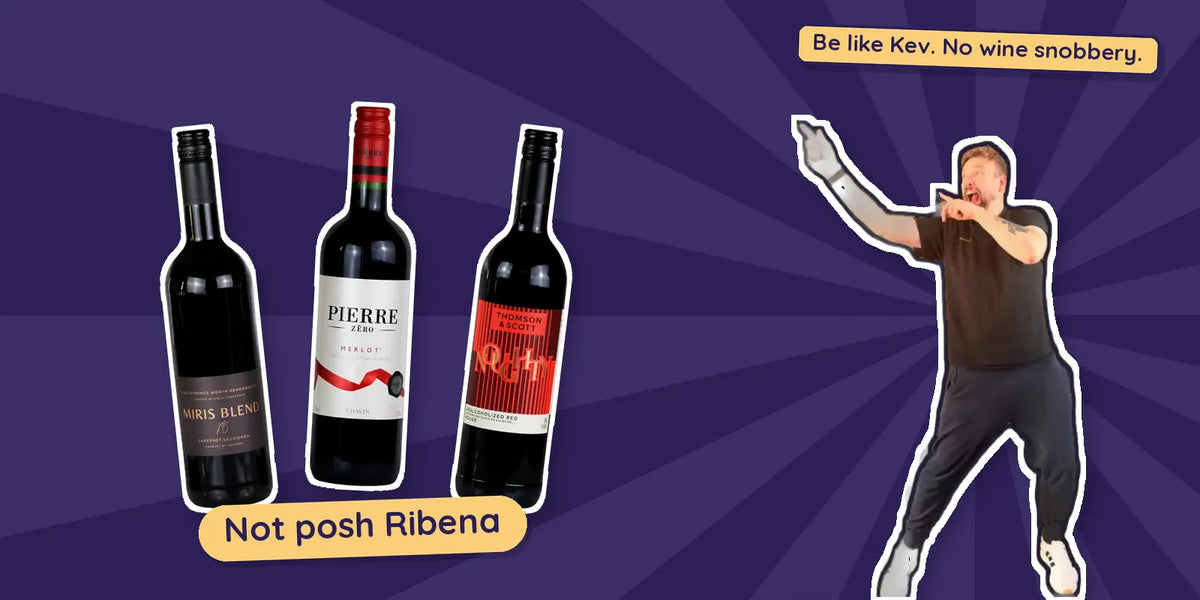
Miris Blend Cabernet Sauvignon: for proper dinners
Miris Blend Cabernet Sauvignon is the closest thing on our shelf to a "sit down, it's Sunday" red. The grapes grow on volcanic soils by Lake Balaton in Hungary, and part of the wine is barrel-aged before the alcohol comes out. Expect blackcurrant, dark plum, a lick of vanilla and a bit of leather and forest floor, with silky tannins.
Verdict: the one for a stew, a roast or a cheese board. Good value at £16. Less good on a hot day in the garden, where it'll feel like wearing a wool coat to the beach.
Pierre Zéro Merlot: the weeknight workhorse
Pierre Zéro Merlot is a French Merlot dealcoholised to a true 0.0%. It's fruity and floral, with no added flavourings and just 16 calories per 100ml.
Verdict: softer and easier-going than the Cabernet. Open it on a Wednesday with pasta or a pizza. If you need genuinely zero alcohol, this is your red. Want to try before you commit? The 20cl bottle pours one generous glass for a fiver.
Noughty Organic Red: for back-label readers
Noughty Rouge is dealcoholised to under 0.5%, certified organic and vegan, and low in sugar at 2.5g per 100ml.
Verdict: one for people who read the back label before the front. The low sugar matters, because the big fear with alcohol-free red is drifting into cordial territory. At £13, it's the cheapest full bottle here.
ILEX Saint-Émilion Merlot 2023: for the big occasion
ILEX is the first alcohol-free wine ever made in Saint-Émilion, from estate-grown Merlot at Château Franc Mayne, in partnership with Wild Idol. Ripe plum, black cherry and a touch of mocha, then soft tannins, spice and cedar.
Verdict: £50 is a lot for any bottle. This is for the anniversary, the big birthday, or the "six months off it" celebration. It's 0.5% ABV, not 0.0%. For everyday drinking, the Pierre Zéro does the job for a lot less. For impressing a wine snob, this is the one.
The wildcard: Copenhagen Sparkling Tea Lyserød
Not a red wine. Bear with me. Lyserød (Light Red) is a dry sparkling tea with red berries and red apple, then oolong, blackberry and hibiscus, and a lightly bitter finish. If still alcohol-free reds feel a bit flat to you, this brings berry fruit with bubbles, and tannin from the tea instead of grapes.
Verdict: for anyone who's been let down by alcohol-free red before and fancies a different route. It's more rosé than Rioja, but it looks brilliant on a dinner table.
How to serve alcohol-free red wine (this matters more than the bottle)
Chill it a bit. Room temperature makes alcohol-free red taste flatter and sweeter. Give it 20 to 30 minutes in the fridge, aiming for roughly 12 to 15°C. Cool, not cold.
Use a big wine glass. Aroma does a lot of the heavy lifting when there's no alcohol. A big glass gives the fruit room to show off. A tumbler gives it nowhere to go.
Always with food. Salty, savoury, smoky dishes make alcohol-free red taste drier and fuller. Mushrooms, tomato pasta, lentils, hard cheese, a burger, dark chocolate. Delicate white fish? Go white instead.
Finish it within a few days. Without alcohol, an open bottle doesn't keep like normal wine. Stopper it, fridge it and drink it within a few days. More on that in can alcohol-free wine go off?
Who'll love it, and who won't
You'll love alcohol-free red if you want the glass, the pour and the food pairing, with a clear head tomorrow. It's great on a weeknight, at a dinner party, or when you're the one driving.
You might not, if your idea of red wine is a dense, oaky, 15% blockbuster that stains your teeth purple. Nothing without alcohol will do that. That's not the wine failing. It's chemistry. Sorry.
If that's you, start with the Cabernet or the ILEX, with a big plate of food. Want help picking? Here's how to choose alcohol-free wine. Buying a few? Six bottles of wine get 10% off and twelve get 15% with our build-a-wine-box, and UK mainland delivery is free over £85.
The serious bit
"Alcohol-free" doesn't always mean zero. Some of the reds here, including ILEX and Noughty, are up to 0.5% ABV. That's a trace, but it isn't 0.0%, and Drinkaware is clear that low-alcohol drinks aren't right for anyone avoiding alcohol completely. If you need zero, choose a 0.0% bottle like Pierre Zéro, or browse our 0.0% collection.
If you're pregnant, on medication or in recovery, check with your GP or support team first. And if you're worried about your drinking, the NHS and Drinkaware both offer free, confidential help.
Kombucha Kev, Functional Drinks Club