Back when I was a big wine drinker, nobody in our house ever asked whether an open bottle could go off. It never lived long enough to find out. A bottle of red had the life expectancy of a Star Trek crewman in a red jumper.
Alcohol-free wine is different. You pour one glass on Friday, put the bottle in the fridge door, and find it again on Wednesday behind the coleslaw. Now you're stood there sniffing it like a sommelier in a crime scene.
So let's sort it out. Properly, because this one's about your stomach as well as your taste buds.
The short answer
Yes, alcohol-free wine can go off, and it usually goes off faster than normal wine once it's open. Alcohol helps preserve wine, and alcohol-free wine has had nearly all of it taken out. Keep opened bottles sealed in the fridge, follow the "once opened" advice on the label (usually a few days), and bin anything with mould, a strange fizz, a bulging seal or a sour, yeasty smell.
Why alcohol-free wine goes off faster
Alcohol is a preservative. It's not the only thing protecting wine, because acidity, tannins and sulphites all help, but it does a lot of the heavy lifting. Most alcohol-free wine is under 0.5% ABV, so that bouncer has gone home early.
What's left is grape juice that's been made into wine, plus some natural sugar. Yeasts, moulds and bacteria quite like that sort of thing. Once air gets in, the clock starts ticking.
If you want to know what actually goes into the bottle, I've written about what's in non-alcoholic wine separately.
None of this means it's a poor product. It means it's more like a carton of fresh orange juice than a bottle of port. Treat it accordingly.
Can it go off before you open it?
A sealed bottle stored properly should be fine until its date. Most alcohol-free wine carries a best-before date. That's about quality, not safety: after it, the wine may taste flatter and duller, but a sealed, undamaged bottle isn't suddenly dangerous at midnight like a Gremlin after feeding time.
Heat is the real enemy. A bottle cooked on a sunny windowsill, or rattling round the car boot all summer, can lose its fruit and taste stewed. Keep unopened bottles somewhere cool and dark.
Every house has one cupboard that's colder than the rest. Nobody knows why. That's your wine cellar now.
Alcohol-free wine is generally made to be drunk young. Don't "lay it down" for a special occasion in 2034.
It won't get better. Neither will I, to be fair.
How long does alcohol-free wine last once opened?
Always check the label first, because producers know their own wine and many print exactly how long it keeps once opened. As a rough guide, still whites, rosés and reds usually keep for two to five days, resealed and in the fridge. Sparkling is best within a day or two, because the bubbles leave faster than guests at a timeshare presentation.
Yes, that means the red goes in the fridge once it's open too. Take it out half an hour before you want it if cold red offends you. The cold slows down oxidation and anything trying to grow in it.
If the label gives a shorter time than my rough guide, the label wins. Every time.
Signs your alcohol-free wine has gone off
There are two kinds of "off", and they need treating differently.
The first is tired. It's oxidised. The fruit has gone, it tastes flat, a bit like cardboard or old apple, or it's turned sharp and vinegary.
That's a quality problem. It's not nice and there's no prize for finishing it, so pour it away.
The second is spoiled, and this is the serious one. Don't drink it, and don't taste it to check, if you notice any of these:
- Mould anywhere, including round the neck, on the cork or floating on top.
- Fizz, bubbles or a pop when you open a still wine. That means something in there is fermenting.
- A bulging cap, a cork pushing itself out, or a bottle that feels under pressure.
- Cloudiness, slime or bits in a wine that was clear when you opened it.
- A yeasty, mouldy, rotten or nail-varnish smell.
Unexpected fizz in a still wine is worth a special mention. If yeast has started fermenting the sugar, it can also make a bit of alcohol, so that bottle may not be alcohol-free any more. Another reason it goes down the sink.
The rule is simple: if in doubt, throw it out. A £6 bottle is not worth a dodgy stomach.
How to store it so it doesn't go off
The useful bit is boring, which is how you know it works.
Reseal it straight after pouring, with its own screw cap or a proper wine stopper. Get it in the fridge.
Don't leave an open bottle on the kitchen side overnight because you "might have another one in a bit". You won't. You'll fall asleep watching Bake Off.
Keep the neck clean, use a clean glass, and don't drink straight from the bottle. Less air in contact with the wine also helps, so leftovers keep better decanted into a smaller bottle with a tight lid.
Before opening, keep bottles cool, dark and away from big temperature swings. Next to the boiler is not cool. Next to the boiler is a sauna for wine.
The easiest fix: buy smaller
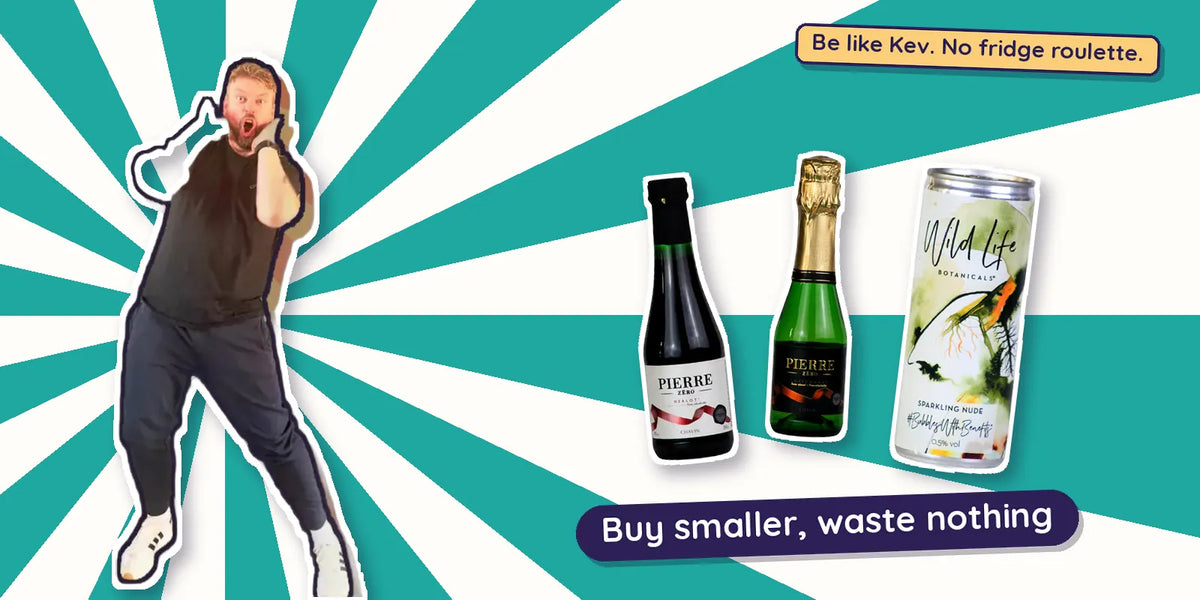
If you only fancy one glass, don't open a full bottle and then play fridge roulette all week. Buy the size you'll actually drink.
The Pierre Zéro Merlot 20cl is one generous glass of fruity, floral French red at 0.0%. Steak, lasagne, done, nothing left to go off. Its sister, the Pierre Zéro Rosé 20cl, is the one I'd pick for a sunny evening when you only want the one.
For fizz, the Pierre Zéro Sparkling Chardonnay 20cl is a mini bottle of bubbles for one. No stopper, no flat leftovers, no guilt. The Wild Life Botanicals Nude can is dry, zesty botanical fizz in 250ml, which is basically sparkling wine that's been sensible about portion control.
If there are two of you, the Wild Idol Sparkling White 37.5cl is a half bottle, so it's gone before the bubbles have time to sulk.
If four of you are sitting down to a proper dinner, a full bottle of Miris Blend Cabernet Sauvignon won't be around long enough to worry about. Blackcurrant, plum, silky tannins. Gone by pudding.
You can mix and match the lot across our alcohol-free wine range, and the wine bottle deal knocks 10% off six bottles and 15% off twelve. If you're still working out which style suits you, my guide to choosing alcohol-free wine is the place to start.
The serious bit
Food safety first. Alcohol-free wine doesn't have alcohol's preservative effect, so follow the storage advice on the label, keep it in the fridge once it's open and drink it within the time the producer gives. If there's mould, unexpected fizz, pressure in the bottle or a bad smell, throw it away without tasting it.
Drinks up to 0.5% ABV count as alcohol-free in the UK, but that isn't 0.0%. If you need zero, check the label. If you're pregnant or taking medication, check with your GP or midwife before drinking anything with alcohol in it, however little.
And if you're worried about your drinking, you're not on your own. Drinkaware and the NHS alcohol support pages are good, free places to start.
Kombucha Kev, Functional Drinks Club