I used to be a big wine drinker. The sort who'd swirl a glass, sniff it, and say "ooh, blackcurrant" like I'd personally picked the grapes. I hadn't. It came from the supermarket, two aisles down from the bin bags.
These days I don't drink alcohol, but the wine bore never really left. He just moved on to reading the backs of alcohol-free bottles instead. My daughter thinks this is the most boring hobby in Yorkshire. She's eight, and she's not wrong.
So let's put him to good use. Here's what's actually in non-alcoholic wine, and how to tell a proper bottle from grape juice wearing a suit.
The short answer
Most good non-alcoholic wine starts as real wine. It's made from grapes, fermented as normal, then has the alcohol removed, so the first ingredient is usually "dealcoholised wine". After that you might see grape must or grape juice concentrate (for sweetness and body), water, acids like tartaric or citric, sulphites (a preservative), sometimes sugar or natural flavourings, and occasionally botanicals or added vitamins. The shorter and more wine-led the list, the better the bottle tends to be.
Dealcoholised wine: the bit that matters most
This is the backbone. It means the producer made actual wine first, with all its acidity, tannin and fermented character, then took the booze out.
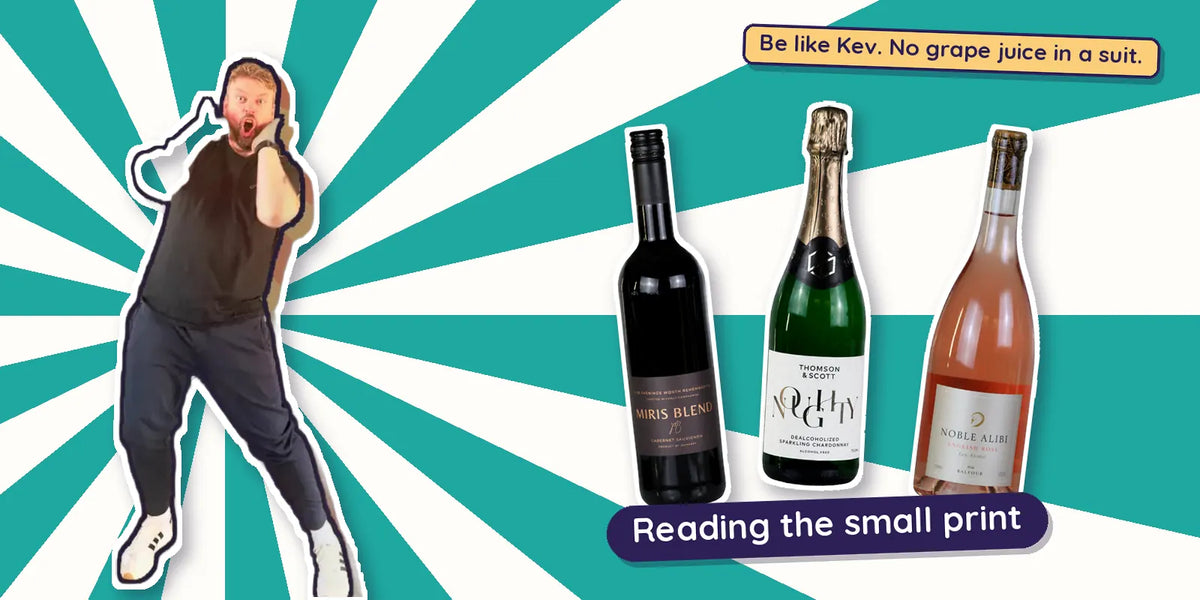
The best producers remove it gently. Miris Blend Cabernet Sauvignon is fermented in steel, half of it spends at least a year in big oak barrels, and then it's vacuum-distilled at low temperature. That's a lot of effort for something you'll drink with a beef bourguignon on a Tuesday. I salute them.
If you see "dealcoholised wine" at the top of the list, that's a good start. If the first ingredient is grape juice, you're basically buying very fancy Ribena. Nothing wrong with Ribena. It just shouldn't cost £9.
Grape must and concentrate: the sweetness patch
Grape must is freshly pressed grape juice. Concentrate is grape juice with the water taken out. Both get added after dealcoholisation to put back some sweetness and body that left with the alcohol.
A little helps. A lot turns your wine into a soft drink. If a bottle tastes jammy and sticky, the concentrate is doing more heavy lifting than Arnold Schwarzenegger in Commando.
Sugar and sweeteners: check the numbers
Alcohol gives wine weight and smoothness. Take it out and some producers reach for the sugar bag to fill the gap.
Good news: lots of alcohol-free wines publish their sugar per 100ml, so you can compare. Wild Life Botanicals Nude is a dry sparkling white with 2g of sugar per 100ml. If you've given up on alcohol-free fizz because it tasted like melted lollies, start there.
Acids, water and sulphites: the backstage crew
Acids like tartaric, malic or citric are often added to keep the wine fresh. Without enough acidity, alcohol-free wine goes flabby. Much like me at 46.
Water sometimes appears to adjust the balance. Not automatically bad, but if a wine tastes thin, you know where to look.
Sulphites are in loads of normal wine too. They stop the wine oxidising and going off. Pierre Zéro Merlot is a true 0.0% French red with no added flavourings, but it still contains sulphites, like most wine does. If you need to avoid them, always check the allergen bit of the label. And if you're wondering how long a bottle lasts once it's open, I answered that in can alcohol-free wine go off.
Natural flavourings, botanicals and added vitamins
"Natural flavourings" can mean a sensible top-up of aroma that got lost when the alcohol was removed. It can also mean a bottle that smells louder than it tastes. Trust your nose and your tongue over the label.
Some brands go a different way and add botanicals on purpose. Wild Life Botanicals blend dealcoholised Spanish wine with natural botanicals and add vitamins and zinc. Does that make it a health drink? No. It makes it a nice glass of fizz with a busier label than the crisps. That's not a health claim. That's a description.
Why you can actually read the label on alcohol-free wine
Here's a fun one for the pub quiz. In the UK, drinks over 1.2% ABV don't have to list their ingredients. Alcohol-free wine is under that, so it's treated like food and has to show an ingredient list.
Which means alcohol-free wine is weirdly more honest than the full-strength stuff. The wine bore in me finds this thrilling. Nobody else at the party does.
So which bottles have the good stuff?
Grape and place matter just as much as the ingredient list. Balfour Noble Alibi is a still English rosé made from Pinot Noir, Pinot Meunier and Chardonnay grown in Kent, the same grapes behind England's best sparkling wine. ZENO White is made from Viura and is all mango, passionfruit and zingy citrus, which is great news if you're a Sauvignon Blanc fan.
If you want help picking, I've written a whole guide on how to choose alcohol-free wine, and reds get their own going-over in my alcohol-free red wine review. Or just browse the alcohol-free wine range. Mix any six bottles of wine or spirits for 10% off, or twelve for 15% off, via the build-a-wine-box page.
The serious bit
In the UK, drinks up to 0.5% ABV count as alcohol-free, but that isn't 0.0%, so check the label if you need zero. If you're pregnant or on medication, check with your GP first. If you have a sulphite allergy or sensitivity, always read the allergen information.
If you're worried about your drinking, Drinkaware and the NHS have free, confidential support.
Kombucha Kev, Functional Drinks Club