When I was a kid, the future was meant to have hoverboards. Back to the Future Part II promised them by 2015. It's 2026 and I'm still riding a bike that squeaks.
The future of alcohol-free drinks, though? That one's actually turned up.
Ten years ago your choice was a warm can of something that tasted like cardboard. Now there are Bordeaux estates making alcohol-free wine and spirit makers fermenting hemp seed in copper pots.
So let's look at where the drinks themselves are heading. How they're made, what's going in them, and which bits are clever versus which bits are a bloke in a fleece with a mood board.
The short answer
The future of alcohol-free drinks is better tech, better ingredients and fewer bad copies. Gentle, low-temperature dealcoholisation with aroma recovery is making alcohol-free wine taste more like wine. Brewers are using clever yeasts and big hop loads to keep the flavour in beer.
Meanwhile a new wave of drinks, like sparkling tea and botanical spirits, isn't copying anything at all. For what's hot on the shelves this year, see my non-alcoholic drinks trends for 2026. This one's about what's going on inside the bottle.
Taking the alcohol out, leaving the flavour in
Here's the problem. Alcohol carries flavour and body, so when you boil it off, the good stuff tends to leave with it. Old-school alcohol-free wine tasted like it had been through a hot wash.
The fix is vacuum distillation. Lower the pressure and alcohol evaporates at a much lower temperature, so the wine doesn't get cooked. Some makers then catch the aromas that escape and put them back in.
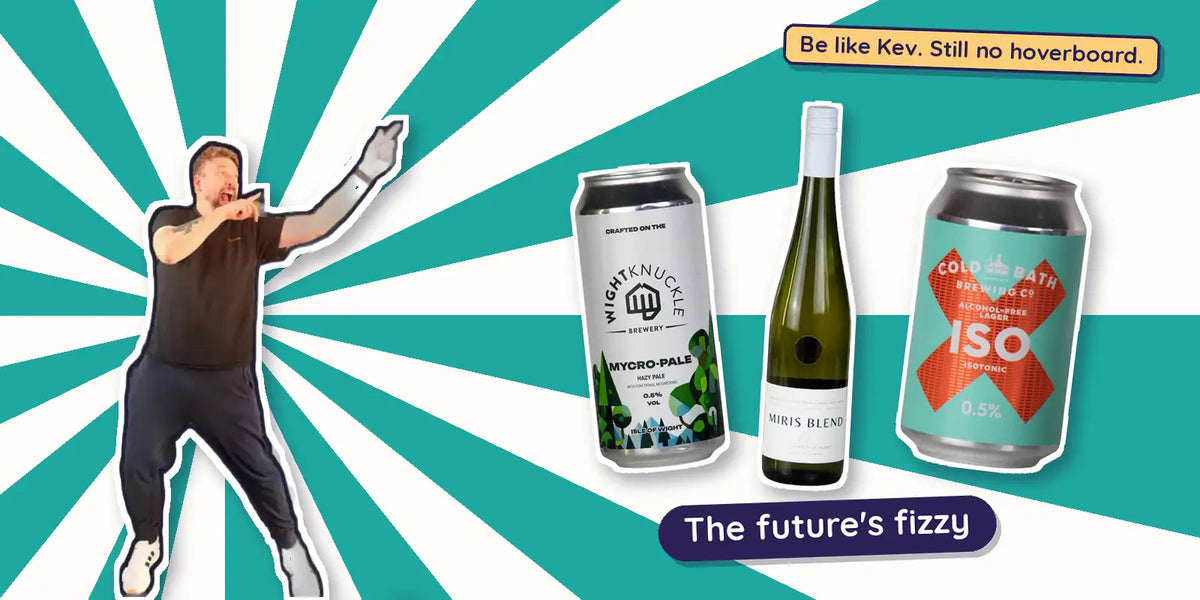
Miris Blend Édition Premier Blanc does exactly that, with gentle vacuum distillation and patented aroma recovery. You get elderflower, lemon, gooseberry and a salty sea-breeze note. It's Ocean's Eleven: get in, nick the alcohol, leave everything else exactly where it was.
Proper winemakers are joining in
For years, alcohol-free wine was made by people who didn't seem to like wine much. That's changing, and it's the biggest sign the whole thing's grown up.
ILEX is the first alcohol-free wine ever made in Saint-Émilion, from estate-grown Merlot at Château Franc Mayne. Plum, black cherry, a bit of mocha and soft tannins. When a Bordeaux estate starts making alcohol-free, you know the wind's changed.
If you want to know what actually goes into the bottle, I've covered non-alcoholic wine ingredients separately.
Beer: clever yeast and tiny calorie counts
Alcohol-free beer has had the biggest glow-up. Brewers now use special yeasts that make very little alcohol, or stop fermentation early, then pile in the hops.
Hops don't care whether there's alcohol. They just turn up and shout "mango".
The side effect is tiny calorie counts. Fierce Beer Fancy Juice is a hazy IPA with 26 calories in a 440ml can, using the same hops as the full-strength version. That's fewer than a digestive biscuit, which I know because I've eaten enough of them to qualify as a researcher.
Function is moving in (some of it)
The next big thing is drinks that do a job beyond tasting nice. Some of it's genuinely useful. Some of it's an "activated" tea towel.
Cold Bath ISO from Harrogate is a helles lager that went to a UKAS-accredited lab and came back verified isotonic. That's a claim with paperwork, my favourite kind.
It's aimed at the people who swapped their hangover for a five-hour run. Still out there, somewhere past Harrogate. Someone send a flask.
Then there's Wight Knuckle Mycro-Pale, a hazy pale with Lion's Mane and Reishi mushroom extracts. Whether mushrooms in beer do anything for your brain is one for the scientists. What I can tell you is it's a juicy Citra and Mosaic pale, and that's enough for me.
Drinks that aren't pretending to be anything
The really exciting future isn't better copies. It's drinks that don't copy at all.
Pathfinder starts with fermented hemp seed, copper pot distilled, then blended with wormwood, angelica, ginger, sage and Douglas fir. It's herbal, bitter and resinous, more amaro than gin. My botanical alcohol-free spirits review goes deeper.
It's the difference between a tribute act and a new band. Tribute acts are fun. New bands are where the good stuff happens.
The labels might change too
Here's a nerdy one. In 2023 the government consulted on updating the labelling rules for no and low alcohol drinks, including whether drinks up to 0.5% ABV should be called "alcohol-free". At the time of writing, the final outcome hasn't been published.
Whatever happens, read the label. The number tells you more than the marketing ever will.
Want to see what's new right now? Andy and I unboxed 20-odd new drinks in our unboxing video. It's like Christmas morning, with more cans and a man from Otley saying "ooh" a lot.
The serious bit
Plenty of alcohol-free drinks contain up to 0.5% ABV. If you need zero, check the label or shop our 0.0% collection. Added ingredients like caffeine or mushroom extracts aren't for everyone, so if you're pregnant, on medication or unsure, check with your GP first.
If you're worried about your drinking, Drinkaware offers free, confidential advice.
Kombucha Kev, Functional Drinks Club