Every January, millions of us decide to drink less using a tried and tested method called "trying really hard". It works brilliantly until about Thursday.
Willpower is a terrible business plan. Trust me, I run a shop that sells alcohol-free drinks in a town famous for having loads of pubs. I know a bad business plan when I see one.
So here's a list of alcohol reduction strategies that don't rely on you being a saint. Pick two or three.
You don't need all of them. Nobody's handing out medals.
The short answer
The alcohol reduction strategies that stick are boring and practical. Decide your limits before you start, not halfway down the glass. Book in drink-free days.
Swap the drink, not the moment. Keep something decent in the fridge so the easy choice is the good one.
And track it, because your memory of "a couple" is a work of fiction.
1. Write down your actual reason
"Drink less" is a wish, not a plan. It's about as motivating as "tidy the loft". You need a reason that still works on a wet Tuesday when work's been rubbish.
Mine was simple. I'm 46, with an 8-year-old daughter, and I want to be fit and daft and still about when I'm in my 70s. Yours might be sleep, money, mornings, your waistline or just being sick of Saturday disappearing.
Write it on a Post-it and stick it on the fridge. Yes, like a motivational poster. No, I won't tell anyone.
2. Decide the number before the first drink
Deciding how much you'll drink after three drinks is like asking a Labrador to guard a sausage roll. The decision has to happen sober.
The NHS tips on cutting down say exactly this: make a plan and set a limit before you start. Tell someone too. Saying it out loud makes it real, and slightly more embarrassing to ignore.
3. Book drink-free days like appointments
Don't wait to "see how you feel". You'll feel like a drink.
That's the whole problem. Put two or three drink-free days in the calendar, ideally back to back, and treat them like a dentist appointment you can't move.
I've written more about why drink-free days matter, but the short version is that they break the autopilot. Monday to Wednesday is a good start. Nobody's ever had a legendary Tuesday anyway.
4. Swap the drink, keep the moment
Most evening drinking isn't about the alcohol. It's about the moment.
The fridge door, the crack of a can, the first sip that says "work's finished". Take that away and your brain sulks like a teenager with no Wi-Fi.
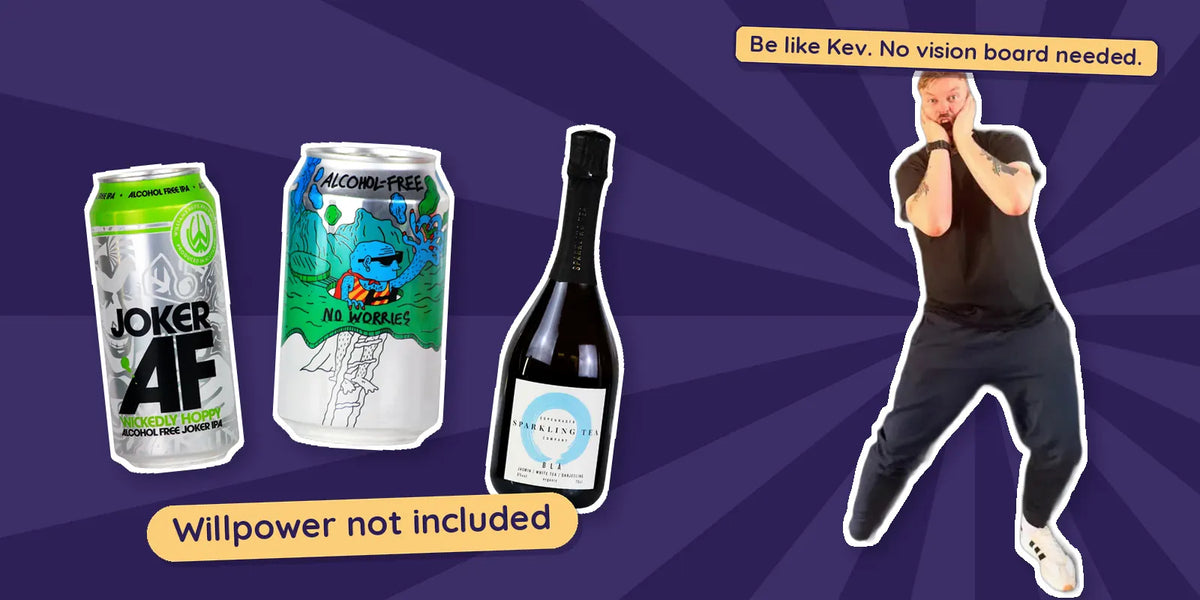
So keep the moment and change what's in the glass. If you're a lager person, our mixed alcohol-free lager bundle is six cans of crisp pils and helles, so you can find your new regular without committing to a case of anything. If you're a hop fiend, Williams Bros Joker AF is a proper bitter, mango-and-pine IPA that doesn't taste like it's apologising.
5. Zebra stripe on nights out
Alternate one alcoholic drink with one alcohol-free one. That's it.
That's the strategy. It's got a silly name and it works, which is more than you can say for most diets.
Half the drinks, same night, same mates. If you want the full guide, here's what zebra striping is and how to do it without anyone noticing.
Mostly nobody will notice. People are far too busy worrying about themselves.
6. Go small
A full bottle of wine on the side is a dare. You open it "for a glass" and somehow it's empty by the end of the second episode. I know.
I used to be a big wine drinker. The bottle always won.
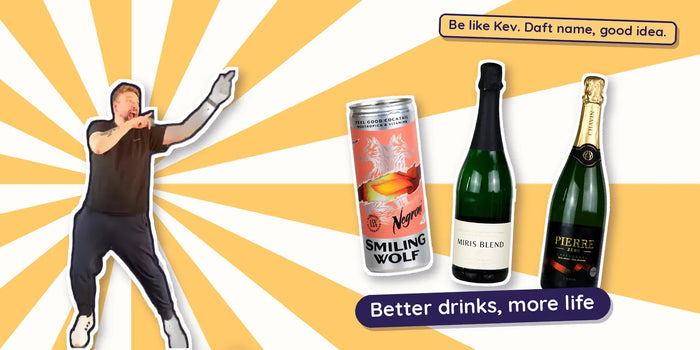
Smaller formats help. A little 20cl bottle of Pierre Zéro Merlot pours one generous glass of fruity French red at 0.0%. One glass, done, no bottle staring at you from the kitchen like a disappointed dog.
7. Have a weekday drink and a weekend drink
Treat your drinks like your clothes. There's the Tuesday stuff and the going-out stuff. A light can for a school night, something a bit special for Saturday.
For midweek, Lervig No Worries is a light, crisp IPA at 73 calories a can. For the weekend, Copenhagen Sparkling Tea BLÅ is jasmine, citrus and white teas with fine bubbles, poured into a wine glass. It looks like you've made an effort.
You haven't. You've opened a bottle.
8. Make the good choice the lazy choice
You'll drink what's in the fridge. That's not weakness, it's physics.
If the fridge is full of wine, you'll drink wine. If it's full of decent alcohol-free stuff, you'll drink that and feel smug about it.
Stock up once and stop relying on 6pm you, who's tired and has terrible judgement. You can build your own mixed box: 6 or more drinks gets 5% off, 12 or more 10%, and 24 or more 15%. Delivery is free on UK mainland orders over £85.
9. Plan your answer for the pub
The hardest bit of cutting down is often other people. "Go on, just one." "What's wrong with you?"
"Are you pregnant?" (Asked, at some point, of every bloke who's ever ordered a lemonade.)
Have your line ready. "I'm driving", "I'm training", or the honest "I just fancy one of these".
Keep it light and move on. There's more on cutting down socially without missing out if your mates are the persistent type.
10. Track it, then be kind about it
Write down what you drink for a fortnight. Not to beat yourself up.
Just to see it. Most of us are shocked, in the way you're shocked when you check your phone's screen time.
And when you have a big night, don't throw the whole plan in the bin. One bad day isn't a failure. It's a Wednesday.
Pick it back up the next day. If you want a structure to follow, here's a week-by-week swap routine that does the planning for you.
What not to do
Don't swap a hangover for a five-hour run every Saturday at dawn, then tell everyone about it. I've met these people.
They gave up drinking and replaced it with Strava. Still out of the game, just in Lycra.
The aim is balance. Feel better, enjoy your life, have a laugh. Cutting down is meant to give you more of your weekend back, not hand it to a running club.
The serious bit
The UK Chief Medical Officers advise not regularly drinking more than 14 units a week, spread over three or more days. Drinks labelled alcohol-free in the UK can contain up to 0.5% ABV, so they're not always 0.0%. If you need zero alcohol, check the label.
If you're pregnant, on medication or have a health condition, check with your GP first. If you drink heavily every day, don't stop suddenly without medical advice, as withdrawal can be dangerous. If you're worried about your drinking, the NHS has free alcohol support, and you can talk to your GP.
Kombucha Kev, Functional Drinks Club